


A representative from the Massachusetts Department of Environmental Protection (MassDEP) surveyed the Lexington High School property Thursday morning to see whether the School Building Committee (SBC) should redesign the new high school to better protect wetlands.
The walkthrough was prompted by an appeal signed by 12 residents — led by resident Jim Williams — who argued that by law, the SBC must evaluate and, if feasible, adopt a design for the new high school that avoids on-site wetlands. The appeal also argues Lexington’s Conservation Commission did not adequately protect the wetlands on the property in its Order of Conditions. Williams wants MassDEP to issue a Superseding Order of Conditions that would mandate the project team to consider other designs that would not affect the wetlands.
Representatives from the town and the SBC argue the project team has done its due diligence in following state wetlands regulations. Lexington considered multiple locations in town for the project, hired an independent wetlands consultant, Apex, to evaluate how the project would affect wetlands, filed a Notice of Intent, worked with the Conservation Commission, and got its approval, subject to additional conditions that further protect wetlands on site.
About 100 people attended the walkthrough, including residents who signed the appeal; members of the SBC; State Rep. Michelle Ciccolo, D-Lexington; people who work for SMMA and Turner Construction, the architect and construction companies Lexington hired to design and build the new school; members of the town’s Conservation Commission; and other interested Lexingtonians.
“This was the biggest group I’ve had in my career,” Jill Provencal, the representative from MassDEP, said at the end of the tour.
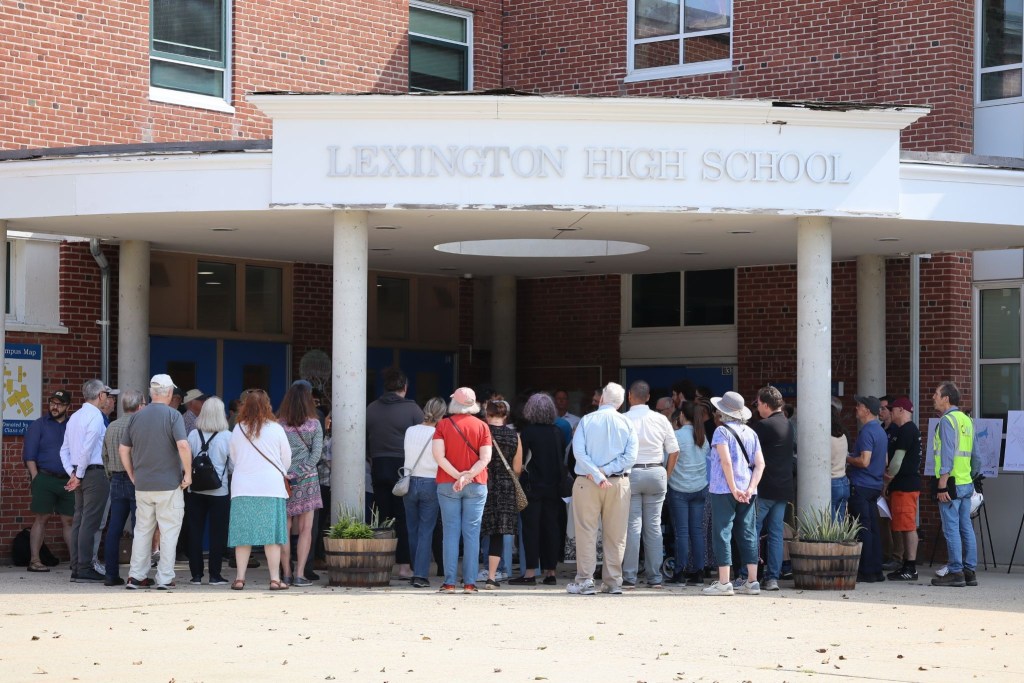

About one-third of the attendees showed their support of building the new school as it is currently designed by wearing “Yes for Lexington” pins. Yes for Lexington is a campaign that sought to mobilize residents to vote “yes” on the debt exclusion vote in December 2025 to fund the LHS building project as it is currently designed. That vote passed with about 63 percent support.
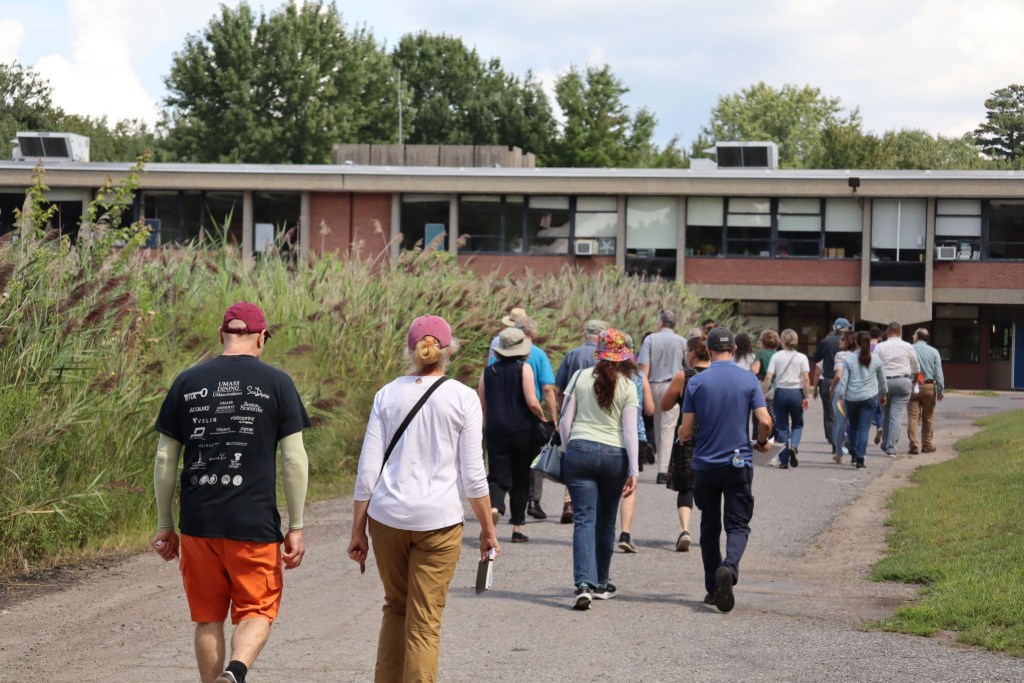
The group walked through the LHS property so Provencal could view all of the wetlands. At each stop, Erin Prestileo, director of site design at SMMA, explained how and why the project affects each wetland and how the team will mitigate wetland disturbance. Williams gave his two cents about why the wetlands should be left alone, too. Among other arguments, Williams explained to Provencal how he worked with students to remove invasive species from the existing wetlands. He worries those species could return if new wetlands are built and native plants are added — which the project team plans to do.
Williams described himself as an “environmental extremist” to the Observer after the walkthrough. He worries that if MassDEP allows the SBC to build the high school as it is currently designed, then wetlands across the state could more easily be altered in the future.
“It would set a harmful precedent,” Williams said to the group of people attending the walkthrough at the beginning of the meeting. “This would gut protections provided by the [law].”
Williams has attended meetings related to the LHS building project for years, voicing his disapproval of how the design affects on-site wetlands.
Olga Guttag, a Lexington resident who has long opposed the design of the new LHS, agreed with Williams. Originally, her main issues with the project were the cost and how it breaks up contiguous open space on the property. But now, Guttag is mainly worried about the town following the law, she told the Observer.
“It’s going to set a precedent,” she said. “Every builder with a project with wetlands will challenge the Conservation Commission.”
The law everyone referenced is the “Wetlands Protection Act Regulations,” which establishes procedures for conservation commissions and MassDEP to follow when issuing permits for work in or around wetlands. Under the regulations, a municipality that wants to build in or around wetlands must file a “Notice of Intent” to and obtain an “Order of Conditions” from the local Conservation Commission. Depending on the area and type of work, those conditions may require the project team to minimize harm to wetlands, mitigate the wetlands by replicating them elsewhere, or avoid them altogether. The regulations do not prohibit building on wetlands; rather, they allow projects that meet conditions imposed through the permitting process.
The next step is for MassDEP to decide whether to issue an Superseding Order of Conditions. That order could affirm, modify, replace, or add to the Conservation Commission’s conditions and could require the town to change the design of the new school.
Provencal will not make a decision until she has all of the information she needs, she said.
“She’s got a tough call,” Williams said. “I hope she’ll say other options must be considered.”
Asked how he’d feel if other options are considered and the project team still decides “Bloom” (the nickname for the current design of the new high school) is the best design, Williams said he trusts Turner Construction and would be fine with that.
Until then, the town must await MassDEP’s decision on the request for a Superseding Order of Conditions — and time is money for Lexington.
If MassDEP gives Lexington a decision by Sept. 1, it is estimated that the pause on construction will cost the town (and therefore taxpayers) between $1 million and $2.5 million in escalation, resequencing, schedule compression, premium time, and shifting more work into winter months.
If MassDEP makes a decision by Oct. 1, between $2.5 million and $5 million could be added to the cost of the project.
And if MassDEP stretches its decision out until Nov. 1, the town likely would not be able to open the new high school for the 2029 to 2030 school year, which could create a whole other menu of added costs.
The Consevation commission would never allow a private project to get away with this destruction of wetlands, but the government gets special privilege since they have unlimited financial resources (and connections) and can manipulate the rules that the rest of us have to follow. Good for the group who is appealing this preferential treatment the school project got awarded.
I personally think it’s ridiculous to protect a muck hole and that was never the intent of the federal wetlands act. But if I have to follow these extremely arbitrary and overreaching rules, so should everyone else.
It’s the state wetlands act that’s at issue, not the federal one. Since you’re in the business of private projects, though, I’m curious if you’ve ever submitted a request for a project involving wetlands replication/replacement. Obviously, it’s challenging as a practical matter, since, to begin with, you’d need to own suitable land to do the replacement in–under Lexington’s more restrictive rules, twice as much land. But it seems to be possible: The conservation commission approved a proposal involving wetlands replication for 475 Bedford Street literally 3 months ago: https://lexingtonma.portal.opengov.com/records/115153