


Tracy Chang began our meeting with an apology; the two-hour Taiwanese home cooking class she was teaching at her restaurant, Pagu, ran long.
A former regular — now a postdoc at the University of Chicago — stopped in. Chang first met Alasdair Hastewell when, as a child, he would join his parents at Stir, Barbara Lynch’s South End demonstration kitchen, where Chang used to guest teach. When Chang opened Pagu in Cambridge’s Central Square, Hastewell was a student at MIT. Chang laughed as she explained that Hastewell became a regular at Pagu, studying at the bar, much like how Hemingway wrote at bars across Paris. When Chang and Hastewell wrapped up their conversation, it was clearly not a goodbye. Chang has known Hastewell and his family for most of his life — he’ll be back the next time he’s in town.
Moments earlier, Chang said goodbye to two other class attendees. They had never been to Pagu before. Even after spending three and a half hours with Chang and 10 other cooking class guests, they were in a rush to go nowhere and instead traded parking tips with Chang like old friends. Chang wore a chef’s coat and running sneakers, but sounded more like a seasoned maitre d’ who just converted first-time visitors into regulars.
Perhaps that shouldn’t be so surprising — Chang is no stranger to restaurants. She remembers watching her grandmother, Chin-Fun Shiue, “moving around, tasting this and that, talking to everyone” at Tokyo Restaurant, which Shiue, who immigrated to Massachusetts from Taiwan at age 55, opened in her late 60s, around the same time she moved to Lexington. Because Shiue grew up during Japan’s occupation of Taiwan, Japanese food essentially became her native cuisine. Tokyo Restaurant became not only a landmark along Fresh Pond Parkway in Cambridge, with its pagoda roofing and individually mounted letters spelling “Tokyo” above the roof, but also served as training grounds for the area’s premier sushi chefs. Alumni of the kitchen include Shinji Muraki of Toraya in Arlington and Toru Oga of the now-shuttered Oga’s in Natick.
Chang grew up living with her parents and grandparents in Lexington, attending Bridge, Clarke and Lexington High School. She forged her own elite path in the restaurant industry, training at O Ya — named Best New Restaurant of 2008 by the New York Times — while studying finance at Boston College, studying pastry at Le Cordon Bleu Paris, and working in Spain for the country’s most decorated Michelin-starred chef, Martín Berasategui. Prior to opening Pagu, Chang paired up with an O Ya colleague to run one of Boston’s most popular pop-up restaurants, Guchi’s Midnight Ramen. The legendary ramen, complete with pork belly and jammy egg, has a permanent place on the Pagu menu today.

In January 2017, Chang opened Pagu and by the end of its first year, Boston Globe food critic Devra First named Chang Chef of the Year. In First’s December 2018 restaurant review, she awarded the restaurant three stars with high praise for the food, calling it, “a kaleidoscope of Instagrammable moments” where the “visual acrobatics [are] so delightful” because “they’re not just stunts. The food tastes very good. It is smartly composed. And it is original.”
But Pagu is more than colorful, technically crisp, and innovative food — it is personal and “authentic,” First wrote. “The menu tells Chang’s story. It conveys her time spent in fancy kitchens, and also outside of them. None of these dishes appear as they would in Spain, or Japan, or Taiwan. They are true to the person who made them.”
A few years after First’s review was published, regional and national recognition rolled in. In 2020 and 2024, the James Beard Foundation — often called the Oscars of the restaurant industry — named Chang a semifinalist for Best Chef: Northeast. Chang was introspective as she reflected on not winning either time.
“I think [getting nominated multiple times] is better than winning, because then you’re relevant again,” she said.
That may be easier to say now. In the Michelin Guide’s inaugural Boston edition last November, Pagu was named one of six Michelin Bib Gourmand destinations — Michelin’s own distinction for “restaurants that serve high-quality food at great value.”
“I didn’t think Michelin would come to Boston in my lifetime,” Chang says, “and I’m still shocked that we got it, because we have no idea when they came. I thought we were off the radar because we’re not new and hot, and we’re not written about all the time.” Before being named a Bib Gourmand, Chang wondered whether she needed to alter Pagu’s business model to keep it financially sound. But whereas James Beard nominations used to boost a restaurant’s reservations for about a month, Chang said that the boost from Michelin, six months later, hasn’t stopped.
Running a restaurant is expensive and the margins are thin. “My greatest fear in opening Pagu was that I had never [worked in one place] for 10 years,” Chang said. “But when you know why you’re doing what you’re doing, you don’t have to be afraid to lose your desire.”
“COVID showed us that there’s a real need for restaurants to be a place of safety and solace for people to restore themselves — which is the original root of the word restaurant. That means so many different things: refueling with food and beverage, but also celebrating events like graduations, weddings, funerals, bar mitzvahs, or just coming to have a quick meeting,” Chang said. Pagu, in other words, is as much a community hub as it is a showcase for Chang’s cooking.
“Restaurants shouldn’t just be a place for people who can afford them,” she adds. “I don’t want to price people out.”
When Chang was forced to close Pagu during the COVID-19 pandemic, she watched her own payroll drop from employing 36 people to just four. That experience led her to help start two nonprofits to help restaurants keep their employees working.
Project Restore Us mobilized the Pagu community and other local restaurants to package and deliver culturally-appropriate groceries to people facing food insecurity. When restaurants were allowed to reopen after the pandemic, the packaging and delivery model shifted to community organizations like the Moses Youth Center in Cambridge. Chang now brings a small group from Pagu to lead food budgeting and cooking classes for the teens there each summer.
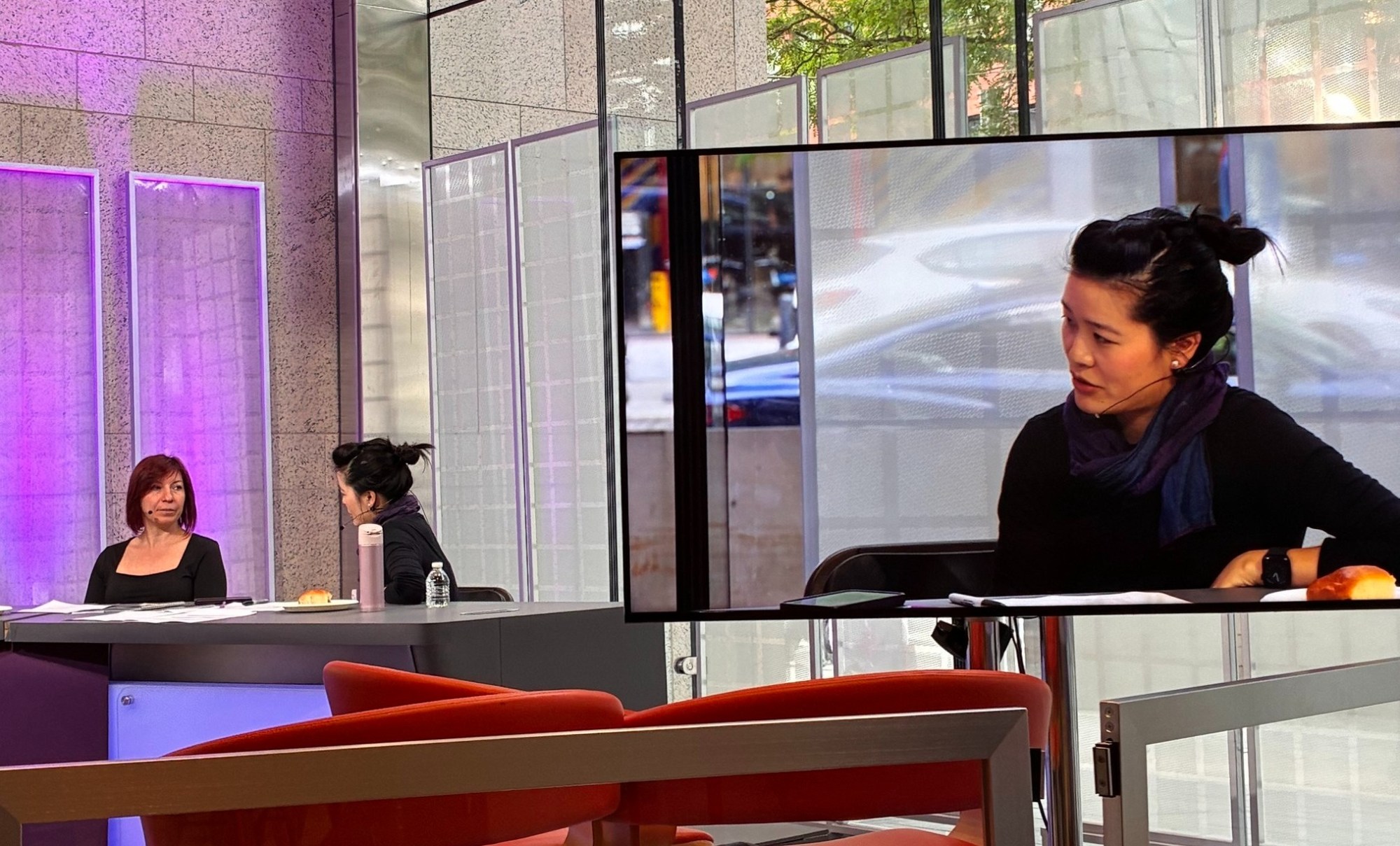
Another community effort close to Chang’s heart is her work supporting refugee chefs with Roundtable. Whether Chang is donating Pagu’s space and resources to host a Refugee Food Festival, chopping 50,000 onions for the featured refugee chefs, or spotlighting their work on an episode of “GBH Amplifies,” a recorded community conversation that Chang hosts each month, she derives joy and purpose from using her platform to uplift others.
“Tracy’s always bringing a different kind of energy compared to everybody that does an ‘Amplify’ segment,” Derrick Gray, a security guard at the GBH Boston Public Library Studio, said. Gray offered some of the loudest applause at the May taping of Amplify, a conversation that featured the story of Ukrainian Natalia Durnieva, a multi-hyphenate — hairdresser, sushi chef, construction supervisor, program coordinator at the Refugee and Immigrant Assistance Center in Boston, and now a featured refugee chef with Roundtable.
Pearl and Bob Campbell from Cupertino, CA, sat in the front row for the May taping of Amplify.
“We’re thrilled that we could find Tracy, so we were delighted to register online [to attend the taping],” Pearl said. The couple was in town visiting their daughter and said attending Chang’s show was a highlight of their trip.
“I’ve had fun having friends on the show and really getting to highlight their work,” Chang said. “What’s the point in featuring people who are already super famous?”
“My husband tells me I’m lucky all the time I get to live my dream — even though the dream comes with a lot of responsibilities, a lot of plumbing, and a lot of HVAC,” she said. “The way I spend my time is largely in operations and thinking about fun things: what is the next event we can do together that is small or large? What is the next media opportunity that we can help these refugee chefs get?”
After nine years of operating Pagu, Chang has amassed local, regional and international recognition, co-founded two nonprofit organizations, and estimates she has fed over 350,000 people.
“The fun things that are twisting and turning in my head are really about what’s the next thing that we can do to help support someone else and their mission, because in a certain way, we’ve made it,” she said.